Why this guide matters
Most borrowers learn the phrase APR right around the moment they are already under pressure: they are in a dealership, comparing mortgage estimates, or deciding whether to move a credit card balance. The problem is that the rate in the headline is usually the cleanest-looking number, not the most honest one. Interest rate tells you the base price of borrowing money. APR, short for annual percentage rate, is meant to tell you what the loan costs once lender fees and financing charges start joining the picture.
That distinction sounds technical until you put real decisions next to it. Two mortgage offers can share the same note rate while carrying meaningfully different APRs because one lender charges more upfront. An auto loan can look competitive until dealer markup or add-on fees push the true cost higher. A credit card can advertise one APR for purchases while quietly using a different one for cash advances or penalty pricing. Once you understand what each number is trying to say, you stop comparing loans on the wrong field and start asking better questions.
Supporting visuals
See the cost story more clearly
These visuals come from freely usable sources and reinforce the rate, fee, and payoff patterns covered in the guide.
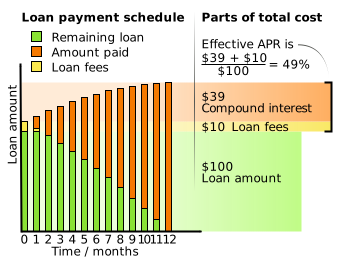
A simple APR visual helps show why the advertised periodic rate is not always the same as the borrowing cost a consumer actually feels over time.
Source: Petteri Aimonen via Wikimedia Commons · CC0 / Public Domain
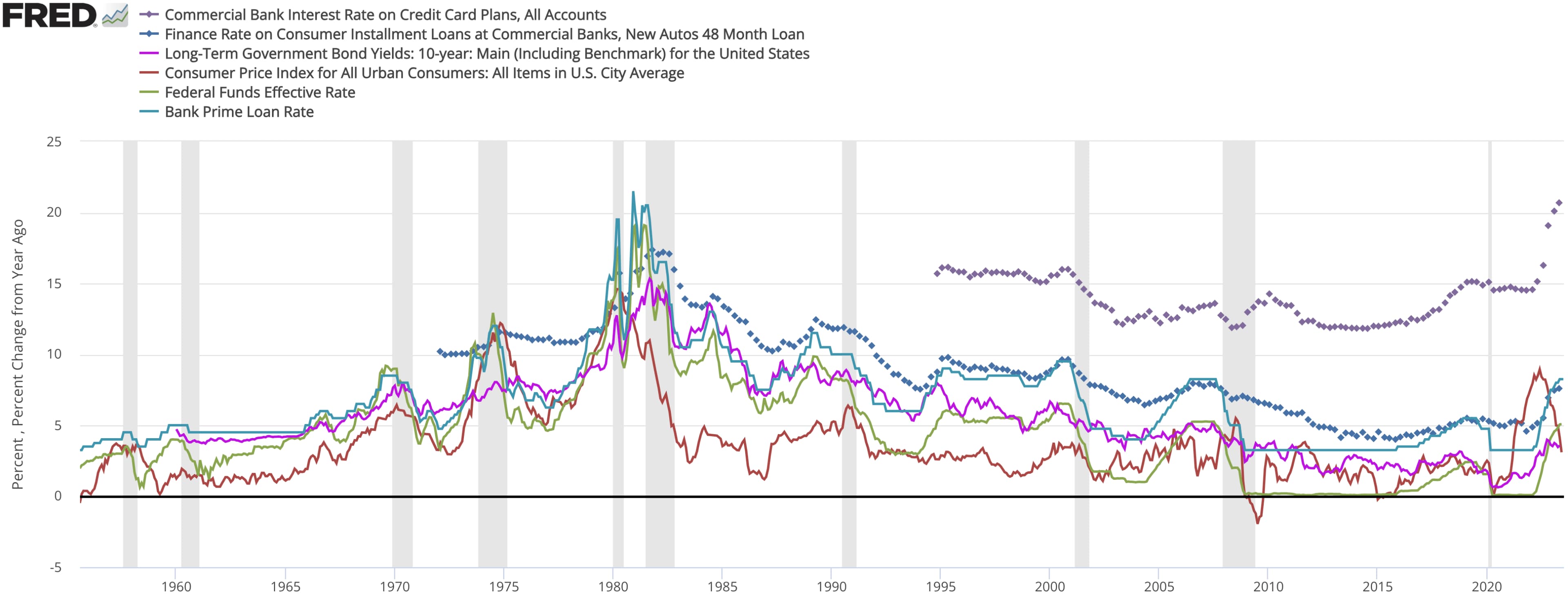
Borrowing rates move together in broad cycles, but the spread between credit cards, auto loans, and benchmark rates explains why the same one-point difference can matter differently by product.
Source: Wikideas1 via Wikimedia Commons · Public domain
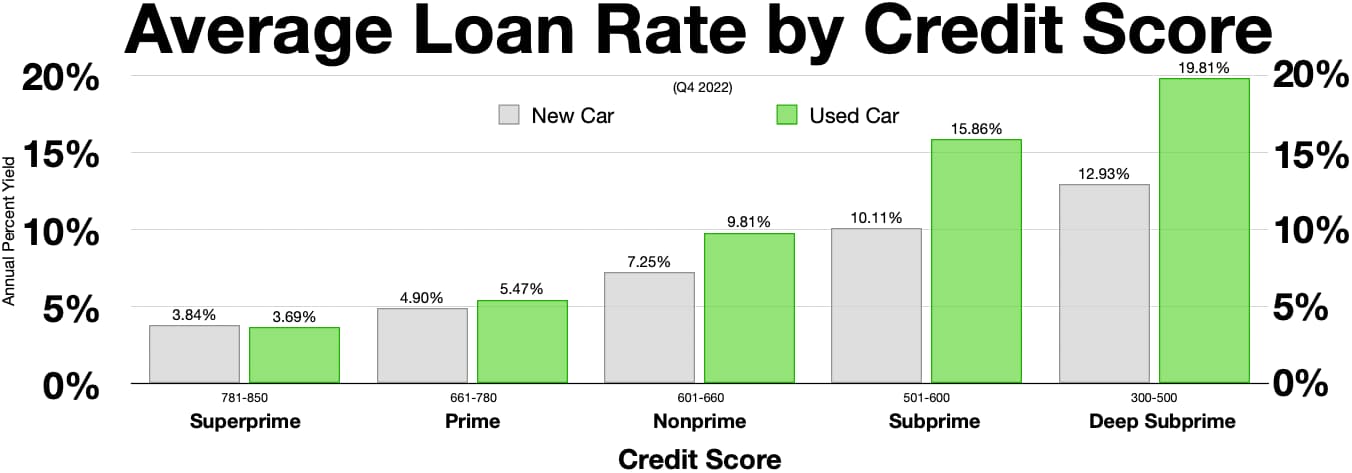
Credit score does not just change approval odds. It changes the APR band you are negotiating inside, which can easily move the lifetime cost of an auto or personal loan.
Source: Wikideas1 via Wikimedia Commons · CC0 / Public Domain
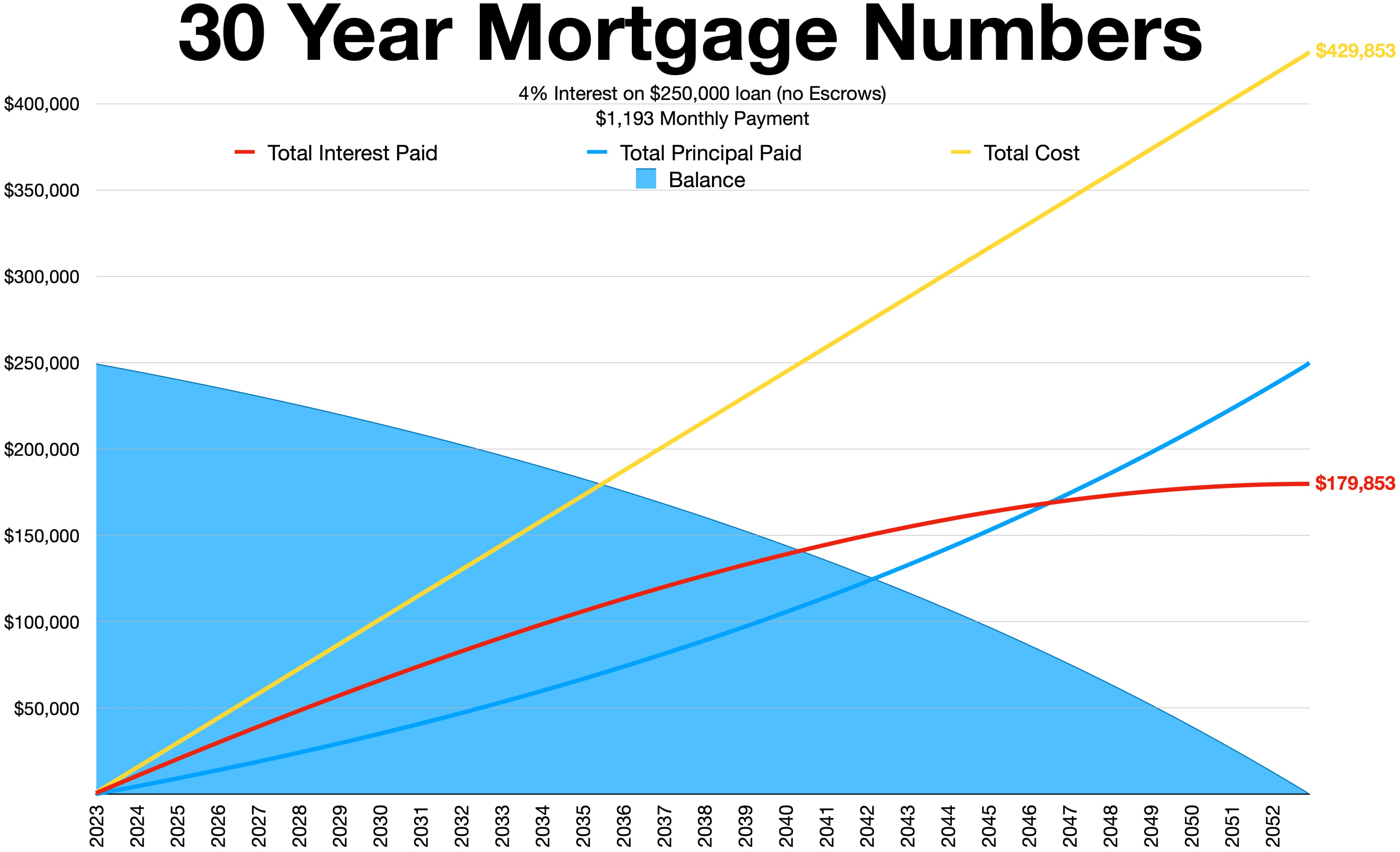
Mortgage math is where the gap between note rate, APR, and total borrowing cost becomes easiest to underestimate, especially once fees and long timelines enter the conversation.
Source: Wikideas1 via Wikimedia Commons · CC0 / Public Domain
Guide framework
Stop comparing the headline rate by itself
The easiest number to spot in a loan ad is often the one that tells the least complete story. That is why APR exists in the first place.
If a lender can advertise only the interest rate, the offer gets to look cleaner than it really is. A 6.25% mortgage rate feels straightforward. What it does not tell you is whether there are origination fees, discount points, underwriting charges, or other costs that make the loan more expensive than another lender offering the same rate. APR was designed to make that comparison harder to game. Under U.S. lending rules, it folds more of the required borrowing cost into one annualized number so borrowers have a better apples-to-apples tool.
That does not mean APR is magic or that it includes every possible cost attached to a loan. Taxes, insurance, maintenance, and plenty of third-party charges can still sit outside it. But if you are comparing two borrowing offers and you ignore APR entirely, you are effectively telling lenders they can hide part of the price in the fine print. The better habit is to treat interest rate as the starting point and APR as the comparison number that deserves your attention first.
- Use the interest rate to understand the raw cost of financing, but use APR to compare competing offers from different lenders.
- When two loans have the same rate but different APRs, the higher APR usually signals more fees or a costlier structure.
- The borrowing cluster starts with the Debt Decision Framework because the real question is total cost, not whether the teaser number looks attractive.
Interest rate tells you the price of the money itself
Interest rate is the percentage applied to the outstanding balance. It matters because it shapes payment math, amortization, and how fast interest accumulates.
On installment loans, the interest rate is what drives the base monthly finance charge. Put the same loan balance, same term, and same repayment schedule next to two different rates, and the lower rate will normally produce the lower payment and lower interest bill. That is why the rate still matters. It is not a fake number. It just is not the whole picture when lenders attach fees or structure the loan in ways that change your effective cost.
This is also why the site's Mortgage Calculator, Auto Loan Calculator, and Refinance Calculator are useful immediately after you compare offers. Once you know the rate range you are considering, you can see how that rate changes the payment, total interest, and payoff shape over time. The rate is the math engine inside the loan. APR is the broader disclosure that helps you decide whether the engine is attached to a fair deal.
- Rate matters most for monthly payment and amortization behavior, especially on long loans where small changes compound over years.
- A lower rate usually wins when fee structures are similar, which is why rate and APR are closest on simple, low-fee loans.
- Run the Mortgage Calculator or Auto Loan Calculator after rate shopping to see whether the payment still fits your budget once term and balance are fixed.
APR matters most when fees and financing structure start doing damage
Mortgages, refinances, and dealer-arranged auto loans are where APR often earns its keep because fees can materially change the true cost of borrowing.
Home loans are the clearest example. A lender can quote the same note rate as a competitor while charging meaningfully higher upfront fees, and those fees show up in APR. That is why mortgage shoppers who compare only rate sheets can still choose the worse deal. The same logic matters when refinancing. A lower rate feels like a win until new closing costs stretch out the break-even point. APR helps surface that tradeoff earlier, and the Refinance Calculator helps test whether the monthly savings actually justify the reset.
Auto loans create a different version of the same problem. The base lender offer may be fine, but dealership markup, financed products, or fee-heavy structuring can push your borrowing cost above what the headline suggested. If your credit profile already places you in a wider pricing band, even a modest APR increase can become expensive fast. That is why it is worth running the Auto Loan Calculator with both the offer you have and the better offer you think you can negotiate. The gap is often more revealing in dollars than in percentages.
- Use APR first when comparing mortgages or refinance offers because fee differences can be large enough to swamp a small rate advantage.
- On auto loans, ask for the APR in writing and compare it with the full amount financed rather than negotiating only the monthly payment.
- If the offer still looks close, the Refinance Calculator and Auto Loan Calculator make the tradeoff easier to see than lender marketing language does.
Credit cards blur the line in a different way
With credit cards, the issue is usually not hidden loan fees. It is that one account can carry several APRs depending on how you use it.
A card can have a purchase APR, a balance-transfer APR, a cash-advance APR, and a penalty APR, all on the same account. That is one reason the phrase 'the APR on my card' can be misleading in ordinary conversation. If you pay the full statement balance every month, the purchase APR may never actually hit you because of the grace period. If you carry a balance, transfer debt, or take a cash advance, the cost picture changes quickly. The relevant APR is the one tied to the behavior you are actually using.
That is where the Credit Card Payoff Calculator and the broader Debt Payoff Calculator earn their place in this article. Credit card debt is usually where APR differences are most painful because the rates are high and the balances can linger. A few points of APR on revolving debt can mean months of extra payoff time and a surprisingly large jump in interest paid. If you are choosing between minimum payments, a target payoff date, or a balance-transfer strategy, this is exactly the kind of debt where comparing the cost correctly matters.
- Do not assume the promotional APR on the mailer applies to every transaction type on the card.
- For revolving balances, a higher APR can drag payoff timelines out much longer than borrowers expect at first glance.
- Use the Credit Card Payoff Calculator for single-card scenarios and the Debt Payoff Calculator when you need to compare payoff order across multiple balances.
Next step
Compare the cost, then test the numbers
Start with APR when you compare offers, then open the Mortgage Calculator, Auto Loan Calculator, Credit Card Payoff Calculator, Debt Payoff Calculator, or Refinance Calculator to see what that difference does to your monthly payment, interest cost, or payoff timeline.
Open the Mortgage / Loan Calculator